Letter to Tracy
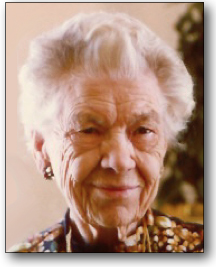
The following letter was written by Emma Olmon to her great-granddaughter Tracy describing her childhood in Saskatchewan, Canada.
Dear Tracy,
As you know, I was born in Sweden eighty-two years ago, March 4th, 1888.
When I was nearly five years old my parents emigrated to Canada. After
a long and eventful, and sometimes hazardous, journey we arrived on the
Canadian Pacific Railroad on Christmas Eve, 1893, at the village of Whitewood,
Saskatchewan. There we were met by friends and were driven by oxen and
bobsled the 30 miles to our new home in this strange land. This trip I
still remember. We smaller children were bedded down crosswise in the bottom
of the bobsled, like sardines in a can, on a bed of straw with a sheepskin
robe under us and one on top. These robes too I remember. They were made
of tanned sheep skins with the wool still on, and were lined with homespun
and home-woven wool material. They were very warm but since it took us nine
hours to reach our destination and because of Canadian winter weather,
we were very cold. We were, however, greeted warmly and made welcome in
the home of Mother's sister who had preceded us by a few years and were
by now established in their own home on a farm. This community was called
New Stockholm and was located in the eastern part of the province of Saskatchewan.
It was also the oldest Swedish settlement in that part of Canada. We lived
in that place for four years.
It might interest you to know that after many adventures of growing
up, and of marrying your great-grandfather Dr. O. E. Olmon, we returned
to this same community during the first World War to take up church work
among these same Swedish Lutheran people. During our stay there we were
instrumental in building a new church to take the place of the small log
church these pioneers had erected. We were also the proud owners of the
second car in the community, an Overland, which was mostly stuck in the
mud in summer and snow in winter so we were glad to rely on our faithful
team of horses. Another important event was that your favorite grandmother,
Marion Lien, was born there, as was also your granduncle Bill.
This summer of 1970 they celebrated their Centennial there. We were
sorry we could not accept their invitation to attend and participate. We
hear they had great times. Many dignitaries attended and among the greetings
were one from the Prime Minister of Canada and one from Queen Elizabeth
of England.
Going back to our narrative, we lived with relatives and friends there
for four years since there was no place to rent and money was very scarce.
Able men worked long hours for fifty cents a day. During that time my father,
your great-great-grandfather, Per J. Vickberg, had found a place for our
home 25 miles to the south where he had filed on a piece of land at Percival,
Saskatchewan. Those days the provincial government granted 160 acres of
land to anyone who would live on it at least five years and till the land.
He had now plowed up a field, dug a well, built a sod barn and was building
a small house with home-sawed lumber.
In the early fall when he came to visit and to bring back some needed
things, Mother pleaded to come along with the children as she was so tired
and embarrassed at crowding in on others. She told Father we could live
in the new barn till he got the house finished. He did not need to be coaxed
so we all came along. To us youngsters it was all exciting.
However, winter came early that fall and Father could not get the house
finished in time. We had to stay in the barn all winter and share it with
a cow and three horses. That is the winter I turned ten, on the fourth
of March. Everything was primitive those days on the prairie provinces
of Canada.
Our barn was built of a double wall of upright poplar poles with straw
packed between, and then covered with sod that Father turned up with the
plow. The roof was also of sod with tar paper underneath. Mother arranged
things as best she could with the few things she had: a cupboard for food,
a bed, a table, a couple of chairs, a large trunk and a small wood-burning
stove to cook on and to keep us warm. I shall never know how we survived
that winter without the roof catching fire from the hot stovepipe sticking
up through the roof. I suppose the snow on top helped. A curtain was the
only partition between our living quarters and the rest of the barn. Mother
said she was thankful there were two exits. On the other side of the curtain
partition was one empty stall and manger where my younger brother and I
slept. Each night our old bossy cow in the next stall would eat as much
of the hay as she could reach so that our feet would slide down into her
manger. My chore would be to haul my brother back up and smooth the hay
that was our mattress so I could go back to sleep. My brother never did
wake up! When your great-aunt Mavis was very small and asked for a story
I told her this incident. After thinking about it for a while she said,
"Why Mother, you slept in a manger just like Baby Jesus did!"
How often little children can set us old ones to thinking!
As early in the spring as he could Father finished the house enough
so we could move in. I remember that to me it felt scary for all the floor
was not finished so the cellar yawned partly open. Mother was so happy
that she cried, but I went back in the empty barn and cried for lost joys.
We had a special game; my brothers and I, hiding things from each other
in the straw between the poplar poles, and climbing over the cow and the
horses' backs to find them. The animals were very patient and seemed to
enjoy our antics. One more memory from that winter was Mother's reluctance
to accept the invitations to the homes of the few settlers there before
us. She was very conscious of the "barn perfume" which would
likely cling to us in spite of her efforts. We were, however, made doubly
welcome since Father quickly took a leading place in the community, and
was for many years the lay preacher in the religious services held in the
homes, and later in the little church he helped to build.
That summer was an important one for me and my eight-year-old brother
for we attended a school for the first time. We walked a mile and a half
to a little country school and made new friends and had new interests.
This school had been established previously by an English community just
to the south of us, so that now we quickly learned to speak the English
language besides the Swedish we were familiar with. Perhaps I should explain
that school was held in summer then and we had our vacation in winter,
because of the severe cold and no transportation. One of our responsibilities
that summer was to help to weed the garden, and to help pick potato bugs
off the potato patch, which seemed such a large one to Alf and me. He would
hold a coffee can while I picked the bugs. I never liked that job, but
we had no spray then. A chore we liked much better was roaming through
the woods around our house to find dry sticks and fallen dry trees to drag
home for Father to cut up for firewood, when he came in from the field.
That summer too I believe we began to locate the cows for milking. We had
two then, and they roamed around free outside the fenced fields. Usually
they were not hard to find for they loved to get into the corral Father
had built, get milked and stand in the smoke built for them called a "smudge."
The mosquitoes and flies tormented them in summer.
One memory that comes to me was that of sitting on a low stool and carding
wool for Mother while she sat at her mother's spinning wheel which they
had brought with them from Sweden. These cards were about six by nine inches
with a handle on the long side of each to hold and with curved wire hooks
on the inside to hold the wool. It was quite an accomplishment to learn
how to make a small bit of raw wool into the smooth rolls the length of
the cards. My ambition was to have ready five such rolls, three, two, then
one on top as she used them up in spinning. First she would fill the three
spindles with fine even thread. Then these threads were twisted together
to make a yarn heavy enough for knitting the socks, scarfs and mittens
we needed. This process she called tvinna (to twist, or spin) and
this she would let me help her with. Now I wish I had those cards and spinning
wheel now, but no one put any value on such "old junk" and when
Mother soon did not use it any more it was chopped up for kindling wood.
It could otherwise have been yours eventually. Perhaps you would like to
figure out what my grandmother's relation to you would be?
P.S. I hope you can use this little history, Tracy. Lovingly,
Emma Olmon