Harbingers Of A Canadian Spring
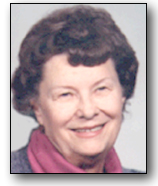
Writing assignment by Marion Lien, April 5, 1994
For
our writing we were given a list of twelve words or phrases which would
trigger thoughts of early springtime. Four of the words suggested a memoir
of early Spring in Canada in 1920. I added one thought which never would
have occurred to anyone who hadn't been a part of the time and place. The
words were: 1. blustery, strong winds; 2: wet ground; 3: mud and 4: bare
tree or trees.
Uncle Jack wasn't really my Uncle Jack, although at age four the ambiguities
of relationships didn't enter my mind. Aunt Tilda was my aunt, and through
her marriage to my real Uncle Jack the other Uncle Jack somehow fitted
into the family fold.
My vague memory of him is of a skinny man with an intriguing, hoppity,
somewhat lurching way of walking. It wasn't the same unsteady, zig-zagging
gait which my grandfather's hired man sometime had when he was försupen,
whatever that meant (the English word is "drunk"), and his breath
didn't have powerful dragon fumes to make me almost choke if I came too
close to him.
Uncle Jack wore only one shoe. Until I saw him walking one day, I had
never noticed that adults have sticks instead of feet. I wondered rather
absently if it would hurt when my own toes fell off when I grew up to be
an old lady.
It was my mother who told me the rest of the story years later after
we had moved from the Saskatchewan prairies to the States. I don't myself
remember getting into trouble on the day Mother told me about when I took
off one of my own shoes and followed Uncle Jack in an earnest attempt to
emulate his admirable walking style. It was spellbinding to see that when
his peg leg sometimes sank a bit into a soft spot where the early spring
ground was thawing, his foot with the shoe would shoot forward while his
bony bottom pointed backwards as he tried to keep his balance. When I attempted
that trick on my own stubby legs I stumbled and fell, only to be surprised
by a resounding smack on my spanking place.
"Skam på dig, du odigdig flicka," my grandfather
roared. "Vet du inte att det är stygg att förlöjliga
äldre personer?" (Shame on you, you naughty girl. Don't you
know that it is wicked to make fun of older people?")
This was only one in a long series of life's puzzlements as I kept trying
to understand the complexities of the adult world. Why was it wicked to
try to be like someone as fascinating as Uncle Jack with his wispy white
hair blowing in the wind and his cheerful whistle?
As was the custom of the homesteaders of those times in the early 1900's
where the shelters they built to house themselves had no running water,
cleanliness was not next to godliness but was second to practicality. The
long, itchy underwear and hand-knitted woolen socks the men wore like a
second skin during the freezing months of a Canadian winter became noticeably
gamy by early April. It was commonly accepted knowledge that to change
underwear before the warm spring weather came would surely lead to dreaded
double pneumonia which was often fatal or to a debilitating seige of the
ague which left one with painfully swollen joints.
A day came in late April when Uncle Jack, who was a bachelor, filled
the copper washing boiler with reasonably clean water from a nearby slough.
He rested it firmly upon the two flat rocks outdoors which served as a
washstand. After adding shavings from a slab of potent yellow soap made
from wood ashes and lye, he dumped his underwear into the water to soften
its stiffness. Singing an Irish ditty to establish a lively rhythm, he
then swished his clothes back and forth with the handle of a pitchfork
until his underpants had changed to a lighter color. Lacking a clothesline,
which he deemed unnecessary since he seldom washed clothes, he tied the
arms of his long johns onto the lower limb of a scrub oak to dry in the
sunshine.
Giving a sigh of satisfaction for a chore accomplished, he sat on the
wooden stoop in front of his shanty. Wrapped in his winter jacket while
enjoying the sunshine and his pipe, he watched with amusement the legs
of his underwear being whipped into a wild, frenzied dance by the strong,
blustery winds.
He thought he had closed his eyes for just a moment, but while he dozed
one dancing leg had become entangled in a twig from the tree branch, forming
along with the dropseat of the long johns a small tunnel. When he awakened
he was astonished to see that a pair of brown and gray rough-winged swallows
were busily carrying mud pellets from the spilled wash water into the sheltering
tunnel of the dropseat. To this the birds soon added dried grasses as a
lining to the nesting base with the apparent intent of settling in for
the summer.
"Well I'll be a hornswoggled dipsy diddler," said Uncle Jack.
Nothing usable was ever discarded during those times, so from a neighboring
homesteader a scant three kilometers away he borrowed the underwear of
the old grandfather who had died during the harsh winter, thus avoiding
the perils of pneumonia and the ague.
In peace and seclusion during the following weeks the swallows raised
the five fledglings which had hatched from their clutch of white eggs.
Most of the emigres who settled in that particular section of the Saskatchewan
prairies during the years when land was free for the taking came from Sweden,
with a few Scotsmen, Englishmen and Irishmen scattered here and there among
them. Since they lived long distances from other habitation, by necessity
they managed to get along well in spite of their diverse customs, languages
and religions. In order to survive it was imperative that they share with
each other whatever expertise each one possessed. Thus it was that my grandfather,
whose self-taught skills included blacksmithing and leather work as well
as farming and the raising of horses, was often in demand. He cured and
tanned the hides of horses and cattle into leather for shoes, harnesses,
gun holsters and the like. He was also the lay preacher for an as yet unestablished
Lutheran church which met in the farmers' homes.
I was never told how Uncle Jack had lost his leg before I was born.
There were no prostheses available in homestead territory in the early
1900's, so it was to my grandfather he came when the wound from the amputation
was sufficiently healed. My grandfather ingeniously fashioned a leather
casing which both enclosed the stump of the leg and furnished a firm support
for the peg leg. Trees were scarce on the prairies, but there were always
willow trees along a creek. It was a carefully chosen, strong willow sapling
which my grandfather used each fall to attach to Uncle Jack's stump as
the previous one began to show wear.
Uncle Jack with his impish sense of humor enjoyed being a harbinger
of spring. Since willows have their own characteristics, early in each
spring season Uncle Jack's willow sapling leg began to grow new leaves.
It was then that the laughing word would travel from farmer to farmer,
"Time to ready the ground for planting. Irish Jack is sprouting again."